3D Character Generation · ByteDance

DreamCharacter-1

From 3D Generative Foundation Models to Product-Ready Character Generation

Technical Report · July 8, 2026
Weizhe Liu*   Yunjie Wu*   Xiangqian Shu   Guangwei Wang   Xiangyu Xu   Peng Li   Yujie Li   Hengkai Guo
Intelligent Creation Team, ByteDance
*Equal Contribution   Project Lead
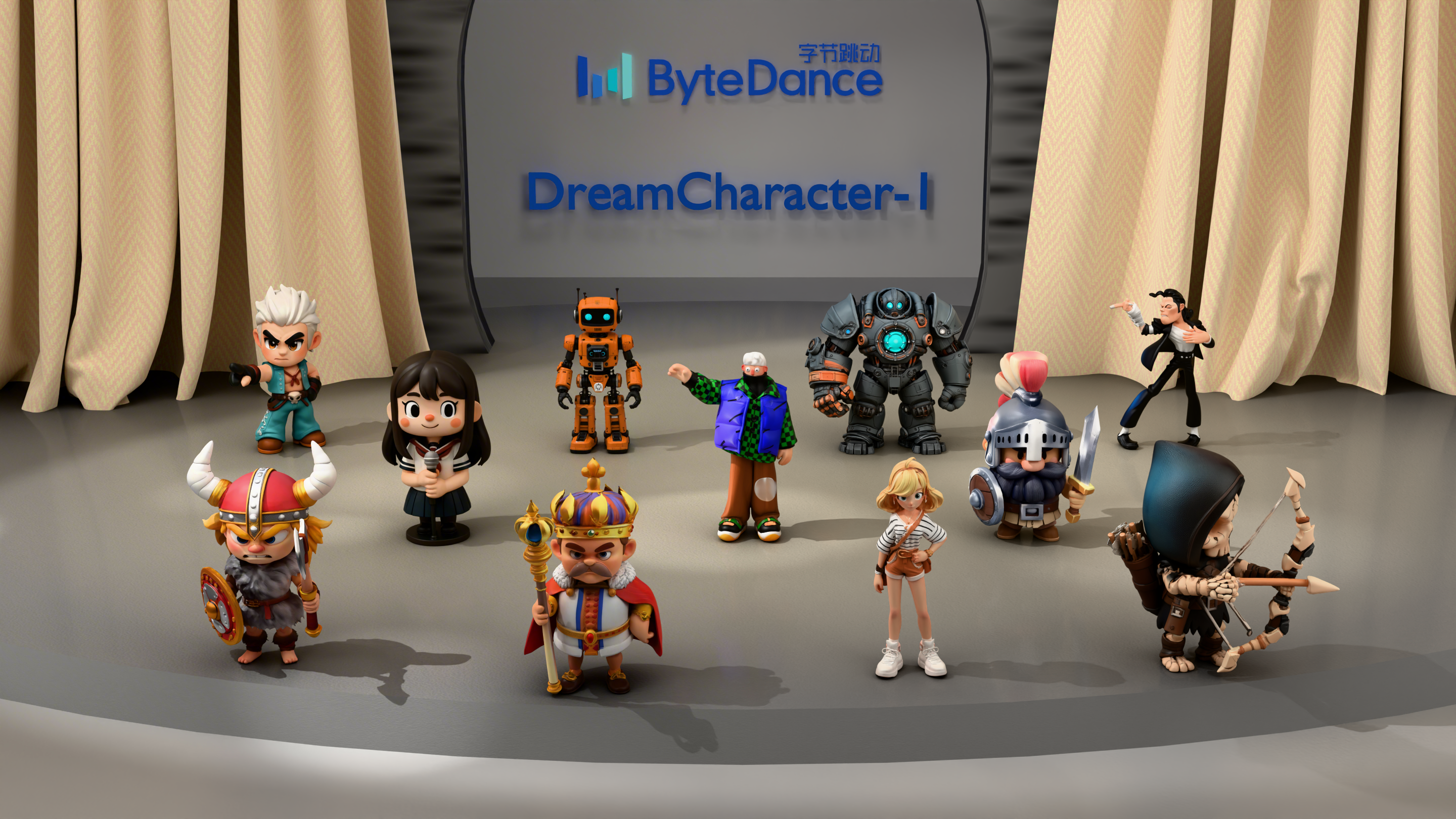
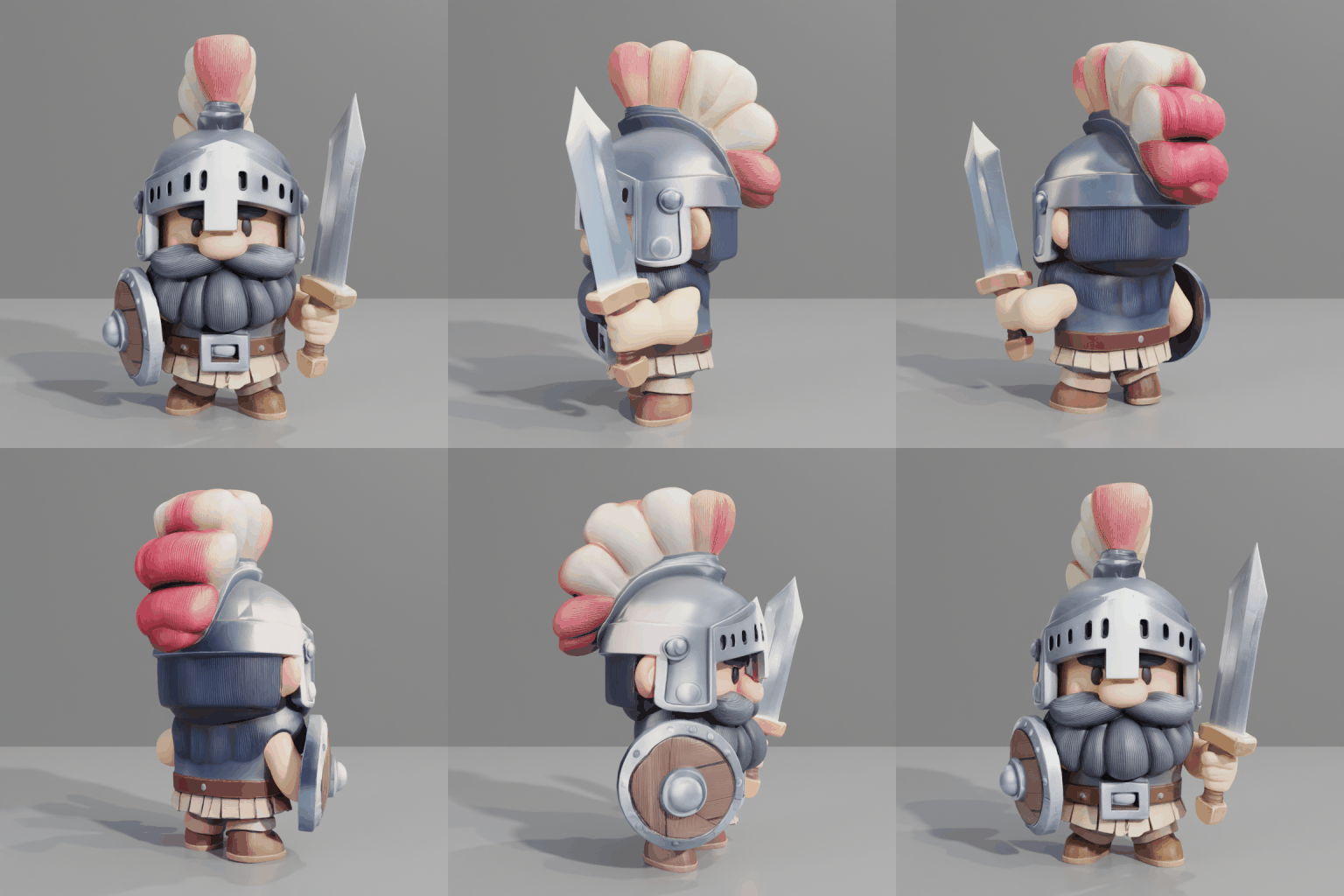
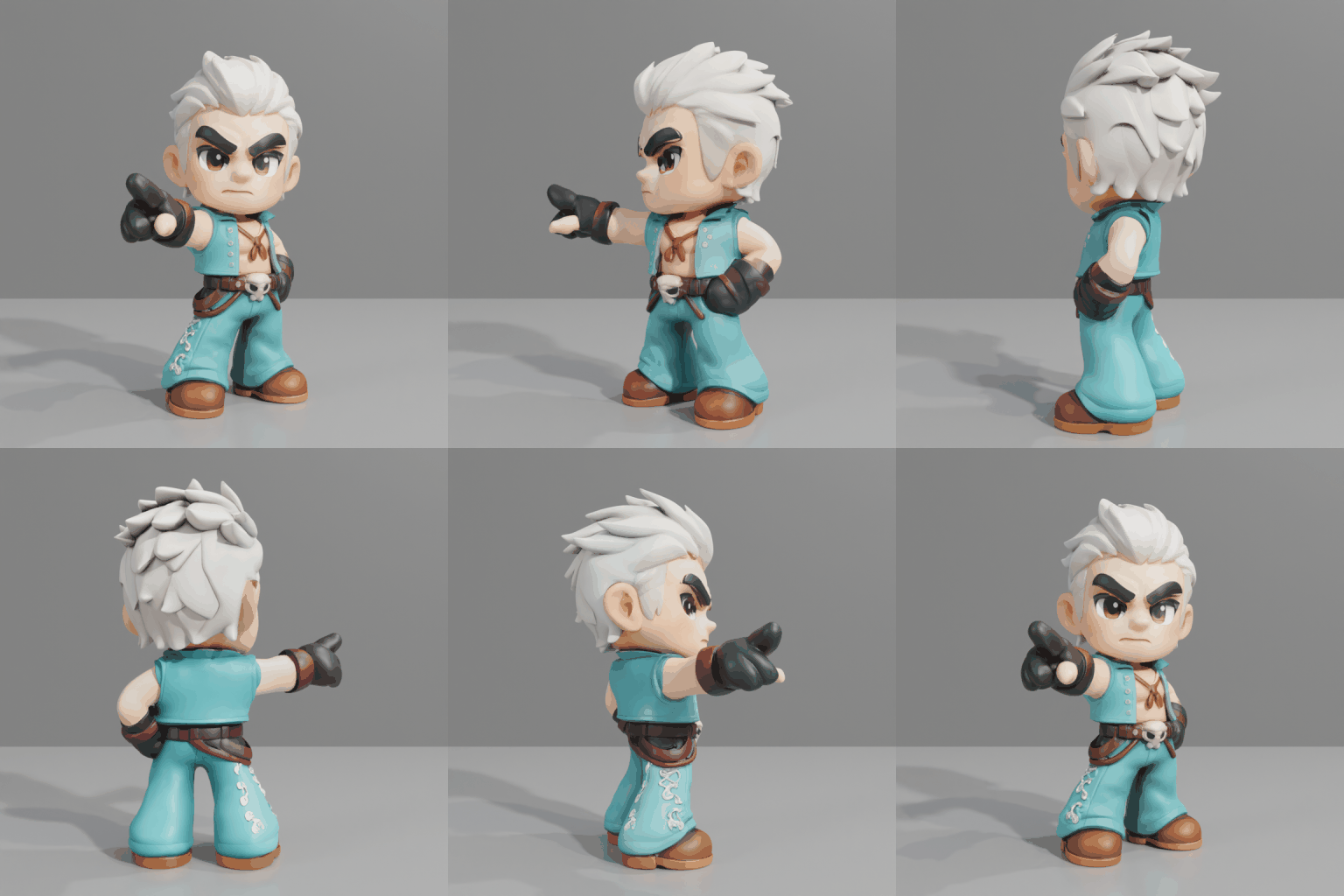
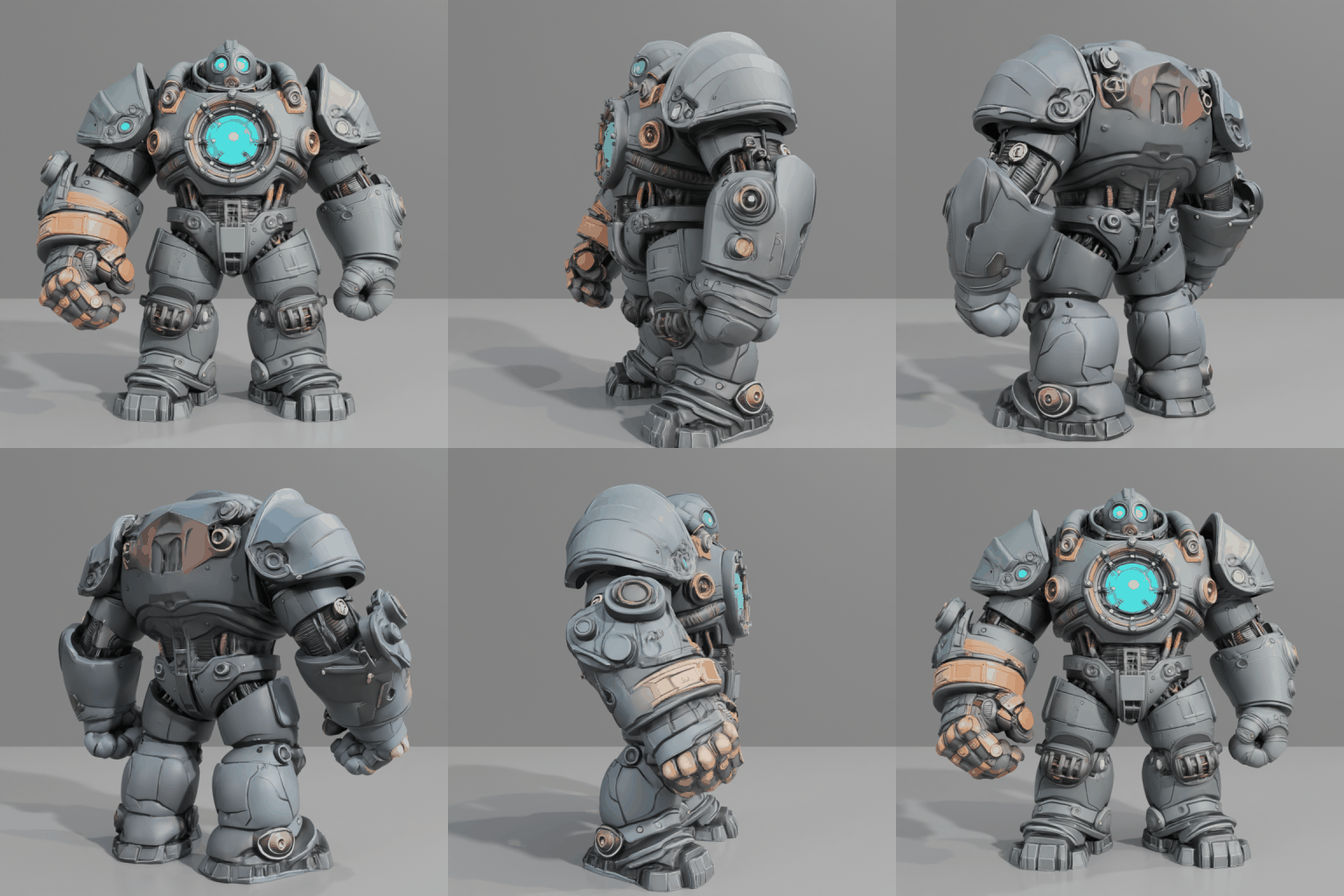
DreamCharacter-1 generated 3D characters gallery
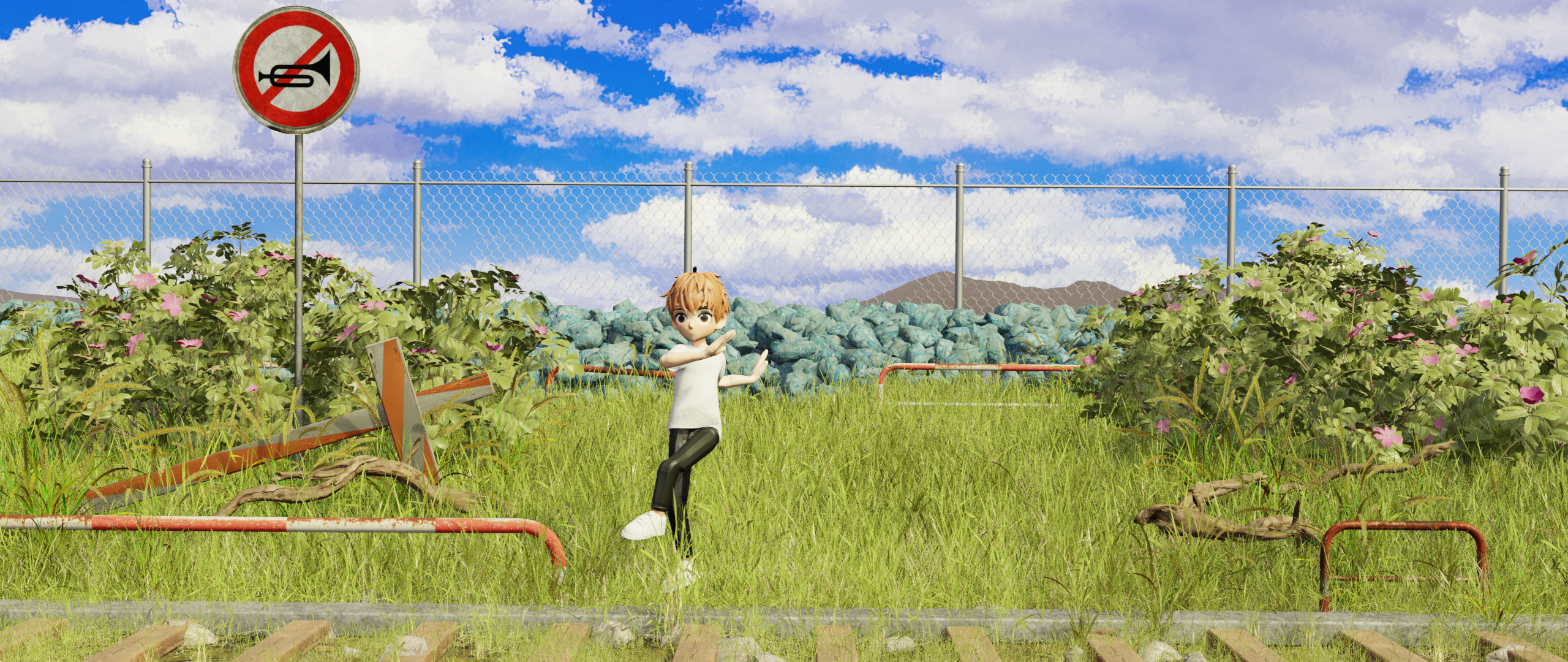
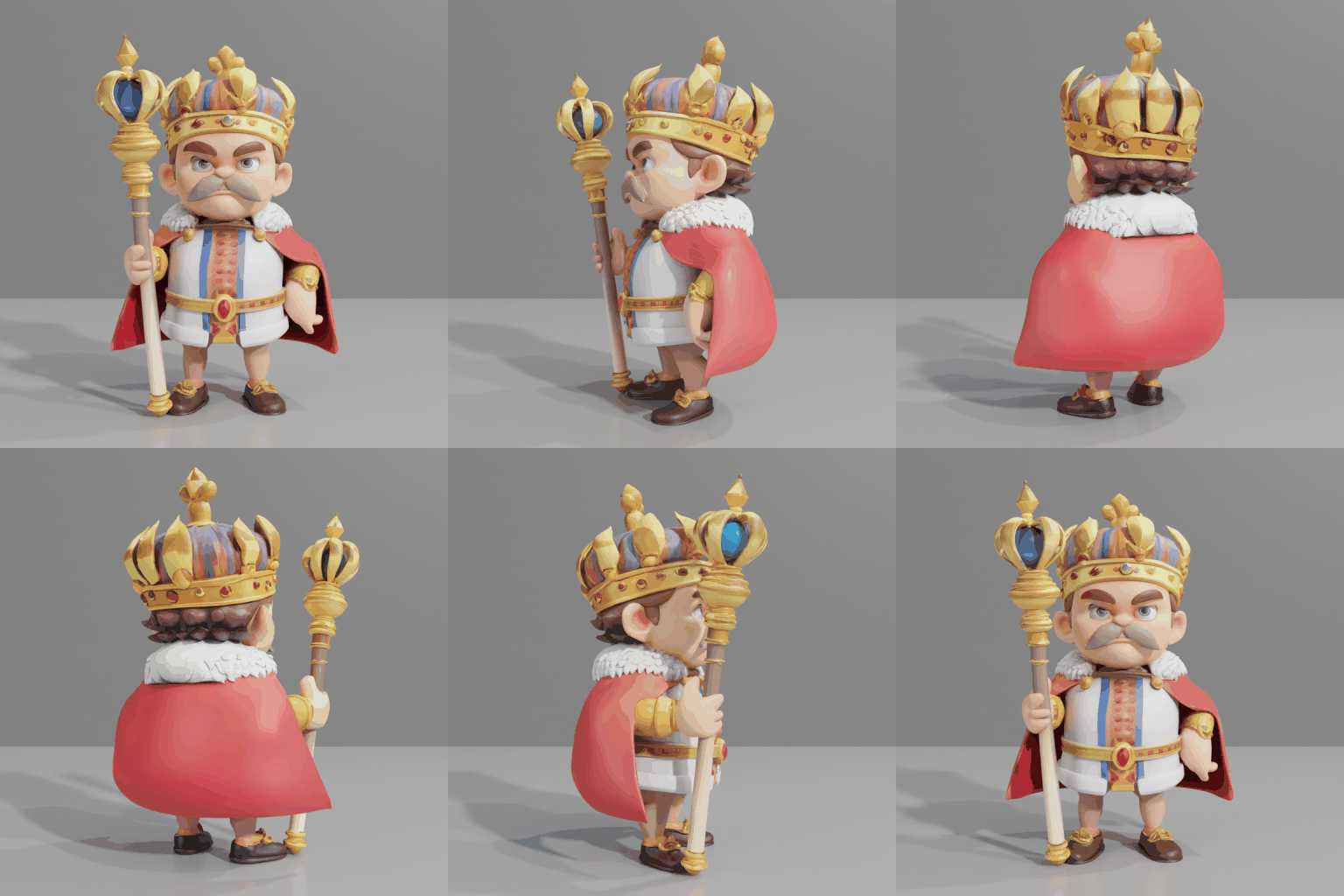
Given a single reference image, DreamCharacter-1 generates high-fidelity, animation-ready 3D characters with plausible geometry, detailed appearance, and strong identity preservation.

Abstract

We present DreamCharacter-1, a lightweight post-adaptation framework that calibrates pretrained 3D foundation models toward high-fidelity, production-ready 3D character generation. Building upon a frozen 3D foundation backbone, our pipeline incorporates three task-oriented components: (1) geometry post-training, which enhances fine-grained surface details through geometric preference optimization; (2) texture post-training, which synthesizes high-resolution textures and refines the appearance of occluded regions; and (3) inference acceleration, which enables scalable deployment.

Extensive quantitative and qualitative experiments demonstrate that DreamCharacter-1 produces visually compelling and structurally robust 3D character assets, consistently surpassing state-of-the-art character generation methods.

Key Capabilities

Three indispensable requirements for industrial-grade 3D character production.

High-Fidelity Geometry

Reconstructs complete high-frequency details including slender thin structures and sharp edges, with plausible backside geometry and animation-ready, anatomically reasonable body topology.

High-Quality Texture

Synthesizes high-resolution, view-consistent texture maps robust to lighting artifacts, recovering vivid detail in self-occluded regions via semantic-aware UV layouts.

Practical Efficiency

Enables fast per-asset inference through optimized 3D representation, lightweight distillation, sparse-attention refinement, and end-to-end pipeline acceleration.

Method Overview

A unified post-adaptation framework that repurposes pretrained general-purpose 3D foundation models through task-specific post-training rather than full backbone retraining.

Coarse-to-Fine Geometry

A two-stage SDF-latent pipeline: a Shape-VAE + Shape-DiT establish global structure, then a refinement DiT recovers high-frequency detail using structured voxel latents and multi-scale image conditioning.

Two-Stage Texturing

A multi-view DiT (Texture-MV) synthesizes view-consistent 2D textures, back-projected onto the mesh; a sparse-voxel 3D inpainting DiT then fills occluded regions for full surface coverage.

Reward-Guided & Accelerated

Multi-metric geometric reward models with reinforcement learning improve anatomical plausibility, while distillation and sparse attention accelerate inference for large-scale production.

Benchmark Results

Evaluated on the VRoid benchmark against state-of-the-art open-source baselines. DreamCharacter-1 sets new records across geometry and texture metrics.

Geometry: Image–Mesh Alignment (higher is better)
Texture Quality across Metrics (raw values; LPIPS and FID shown as 1−value, all higher is better)

Geometry Generation — Table 1

MethodULIP ↑Uni3D ↑
CharacterGen0.55160.6486
StdGEN0.66970.7278
Hunyuan3D-2.00.80250.7968
Hunyuan3D-2.10.82730.8195
TRELLIS-1.00.80160.7953
TRELLIS-2.00.83290.8261
Pixal3D0.82760.8247
DreamCharacter-10.85320.8497

Texture Generation — Table 2

MethodSSIM ↑LPIPS ↓FID ↓CLIP-Sim ↑
CharacterGen0.88740.18760.07980.9183
StdGEN0.90000.18090.16060.8874
Hunyuan3D-2.00.90250.11590.17790.9152
Hunyuan3D-2.10.91510.09100.06780.9440
TRELLIS-1.00.90300.11930.18380.9165
TRELLIS-2.00.91880.10220.08640.9073
Pixal3D0.90740.11730.03390.9231
DreamCharacter-10.93490.06860.03190.9576

Limitations

Training data still lacks diversity in identities, clothing, and styles; the SDF-based representation complicates non-watertight and very thin structures; the multi-stage pipeline depends on multiple models; and inference remains slower than standard image generation. Future work targets richer character data, more flexible geometric representations, a unified model, and improved runtime efficiency.

BibTeX

@techreport{liu2026dreamcharacter,
  title   = {DreamCharacter-1: From 3D Generative Foundation Models
            to Product-Ready Character Generation},
  author  = {Liu, Weizhe and Wu, Yunjie and Shu, Xiangqian and
            Wang, Guangwei and Xu, Xiangyu and Li, Peng and
            Li, Yujie and Guo, Hengkai},
  institution = {Intelligent Creation Team, ByteDance},
  year    = {2026},
  month   = {June}
}